
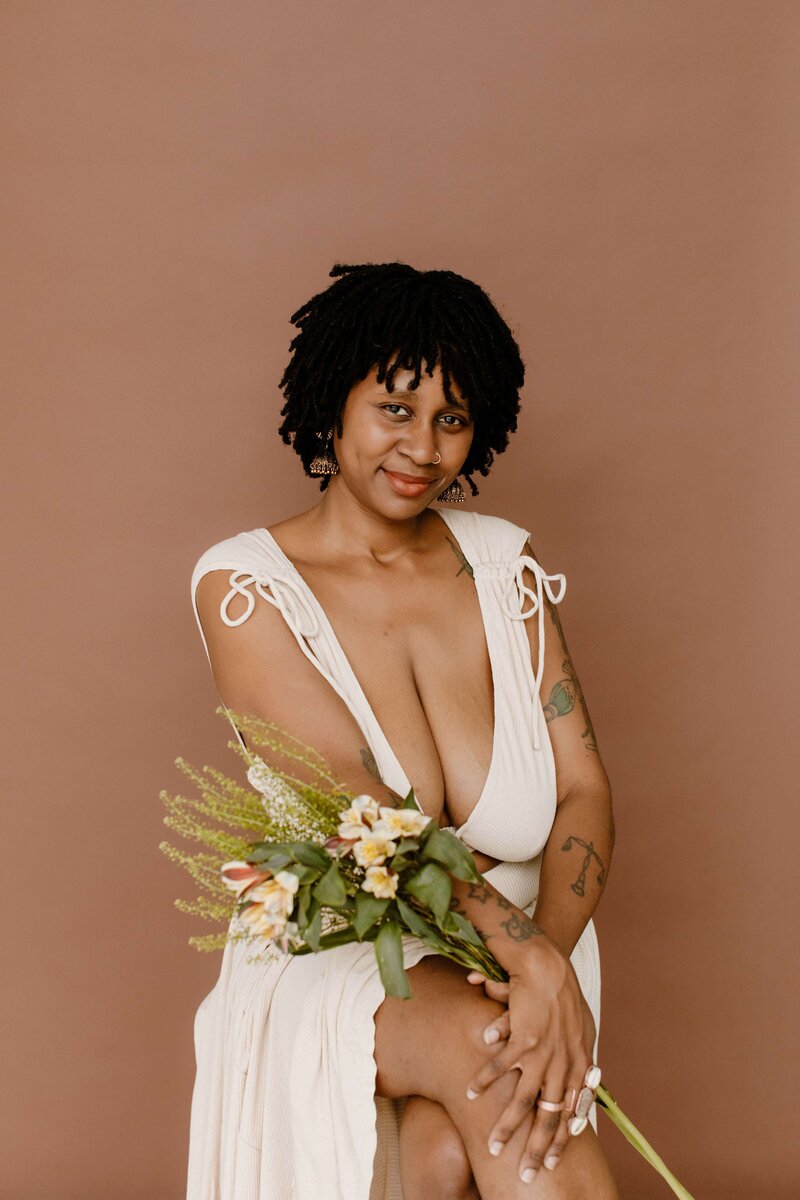
Meet Anuuma
The Medicine Woman and Master Herbalist that is dedicated to breaking generational curses for the Diaspora.
recipes
apothecary
spirituality
ancestral medicine
HOLISTIC HEALTH FOR BLACK WOMEN
The 7 Biggest Mistakes New Herbalists Make
January 22, 2026
(And the Difference Between Colonized Herbalism and Ancestral Herbalism)
I’m Anuuma Earth, Master Herbalist, Medicine Woman, and educator at the Institute of Ancestral Medicine. I teach Black, Indigenous, Women of Color how to become professional ancestral herbalist practitioners, not hobbyists.
And what I see over and over again is this:
People aren’t failing at herbalism.
They’re being taught the wrong system.
Most people today are learning a colonized version of herbalism, and if you follow it, you’ll stay confused, disconnected from spirit, and afraid to actually help people heal.
If you feel like you’re learning a lot but you don’t feel confident…
If you don’t trust your body as a source of knowledge…
If you don’t feel ready to practice or guide someone through healing…
This message is for you.
Below, I’m breaking down the seven biggest mistakes new herbalists make, and the critical differences between colonized herbalism and ancestral herbalism, so you can decide which path you’re actually on, and which one you want to pursue.
Mistake #1: Learning Herbs Without Context
Colonized herbalism teaches you:
- “This herb does this.”
- “This herb treats that symptom.”
It focuses on memorization.
Ancestral herbalism asks deeper questions:
- Who is this medicine for?
- When does it help?
- When does it harm?
Ancestral herbalism understands constitution, terrain, season, lineage, and trauma. It recognizes that healing is never one-size-fits-all.
Colonized herbalism creates memorization.
Ancestral herbalism creates discernment and connection.
You are treating a whole being with whole plants, not isolating symptoms or extracting plants into something unrecognizable.
Mistake #2: Treating Symptoms Instead of Systems
Colonized herbalism teaches:
- Skin issues need skin herbs
- Anxiety needs calming herbs
- Hormones need hormone herbs
This is just symptom-chasing.
Ancestral herbalism asks:
Why is the body expressing this right now?
If you don’t understand the gut, liver, lymphatic system, and nervous system, you’re not practicing medicine, you’re rotating plants and using herbs like drugs.
Root-cause healing requires seeing the entire system, not just what’s screaming the loudest.
Mistake #3: Skipping Embodiment
Colonized herbalism relies on:
- Books and intellectual knowledge
- Online protocols
- External authority
Ancestral herbalism teaches that the body is the first classroom.
If you haven’t cleansed yourself…
If you haven’t regulated your nervous system…
If you haven’t walked your own healing journey…
You will hesitate.
You will second-guess.
And you will over-refer everything.
You cannot guide someone where you have not gone.
Embodiment is not optional. It’s foundational.
Mistake #4: Practicing Without a Spiritual or Ethical Framework
Colonized herbalism treats:
- Herbs as commodities
- Clients as transactions
Ancestral herbalism understands:
Medicine is a sacred responsibility.
Our ancestors understood initiation, apprenticeship, boundaries, scope, and spiritual hygiene.
Without these frameworks, practitioners burn out—or unintentionally harm others—because they’re practicing from disconnection rather than reverence.
We already saw this fail in allopathic medicine.
Prescribing herbs as drugs does not work either.
Mistake #5: Staying a Hobbyist Forever
Colonized herbalism sounds like:
- “I’ll practice on friends.”
- “I’m not ready yet.”
- “I’ll take one more course.”
Ancestral herbalism follows a structured progression:
Student → Practitioner → Professional
Herbalism was never meant to be a hobby.
It is a rite of passage. A way of life.
Our medicine women were chosen, not because it was trendy, but because they were called to hold responsibility for community health.
Without a clear path to competence, confidence, and income, you remain stuck in indecision.
Mistake #6: Avoiding Business Out of Fear
Colonized herbalism teaches:
- Money isn’t spiritual
- Selling is wrong
Ancestral herbalism knows:
Sustainability is ethical.
If you cannot support yourself, you cannot serve long-term.
You will be burned out, stressed, and in survival mode.
Ancestral herbalism includes building a spirit-led practice that feeds you and the community, without exploitation or compromise.
Mistake #7: Learning in Isolation
Colonized herbalism is:
- Self-paced
- Disconnected
- Mentor-less
Ancestral herbalism remembers:
Apprenticeship is how we learn.
We sat with elders.
We listened to stories.
We learned in community, with accountability and shared experience.
Medicine is relational.
You need mirrors.
You need elders.
You need guidance from those who have walked this path before you.
I’ve devoted the last 15–16 years of my life to this work, not from ego, but so my students don’t have to make the same costly mistakes I did.
Why I Created the Ancestral Herbalist Certification Program
If what you’ve been learning feels shallow, fragmented, or disconnected from spirit, it’s not because you’re incapable.
It’s because colonized herbalism was never designed to create sovereign, root-cause healing practitioners.
It was designed to create consumers.
Trends.
Instagram content.
Ancestral herbalism creates real practitioners.
That’s why I created the Ancestral Herbalist Certification Program, not as a course, but as a professional initiation into ancestral medicine.
Inside, you receive:
- A structured, embodied curriculum
- True root-cause healing education
- Spiritual and ethical frameworks
- Clinical confidence
- A clear path to building a sustainable, spirit-led practice
This is not for hobbyists.
It’s for Women of Color who are done dabbling, done working jobs that drain them, and ready to answer the call for real.
Your Invitation
If this resonated with you, I invite you to apply.
Not everyone is accepted, because this work requires responsibility.
But if you’re meant to be here, you already know.
You can find the application link below.
Remember this:
Herbalism isn’t about knowing more herbs.
It’s about becoming someone who can hold medicine, deeply, spiritually, intuitively, and ethically.
I’ll see you in the next one.
I love you,
Anuuma
LISTEN TO THIS EPISODE HERE –
Leave a Reply Cancel reply
Terms and Conditions
Privacy Policy

APOTHECARY
Home
About
certification
youtube
Podcast
BLOG
FOLLOW ON
DISCLAIMER: The Institute of Ancestral Medicine and Anuuma Apothecary are founded by Anuuma Earth. This disclaimer is required. Nothing on this website is medical advice and has not been approved by the FDA. You should consult with your QUALIFIED holistic practitioner before making any changes to your diet or physical activity.
contact
JOIN OUR WEEKLY NEWSLETTER
heal at home

lineage
free clinical training


Get my weekly Newsletter
want to learn all about holistic healing and ancestral medicine? join the community, now. education, inspiration, & invitations.